
Precision Cooking Appliances: Best Examples for 2026

Precision cooking appliances are defined as kitchen devices that use sensor-based temperature control to deliver repeatable, accurate results within tight tolerances. The best examples of precision cooking appliances include sous-vide immersion circulators, smart induction ranges, combi oven steamers, and calibrated measurement tools like instant-read thermometers and kitchen scales. These devices achieve temperature stability within ±0.1°F, a standard borrowed from professional test kitchens and laboratory equipment. Culinaryprofis stocks commercial-grade versions of these tools for home cooks who want professional results without guesswork.
1. Sous-vide immersion circulators
Sous-vide is the industry term for cooking vacuum-sealed food in a precisely controlled water bath. Immersion circulators are the appliances that make it work. They clamp onto any pot, heat the water, and circulate it continuously to maintain a uniform temperature throughout the bath.
The core advantage is edge-to-edge consistency. A chicken breast cooked at 145°F sous-vide reaches exactly 145°F from surface to center, every time. That level of control is impossible to replicate with a standard stovetop or oven.
Key features to look for in a sous-vide circulator:
- Temperature stability: ±0.1°F accuracy is the benchmark for professional-grade units
- Heating power: 1,100-watt heaters bring a water bath to target temperature in under 30 minutes
- App connectivity: Wi-Fi and Bluetooth controls let you monitor cook times remotely
- Clamp design: A secure, adjustable clamp fits pots from 4 quarts to 20 quarts
- Quiet operation: Low-noise circulation motors matter for long cooks of 12 to 48 hours
App control is convenient, but manual controls on the unit itself are what experienced cooks rely on when connectivity drops. Prioritize a unit with a clear physical display and tactile buttons.
Pro Tip: Set your sous-vide temperature 1°F below your target and verify with a calibrated instant-read thermometer before sealing the bag. Circulator displays can drift slightly over long cook sessions.
2. Smart induction ranges with precision sensors
Smart induction ranges represent the most versatile category of high-end cooking appliances available for home kitchens. They replace multiple appliances by combining induction heating with AI-assisted cooking modes, integrated temperature sensors, and convection oven functions in one unit.
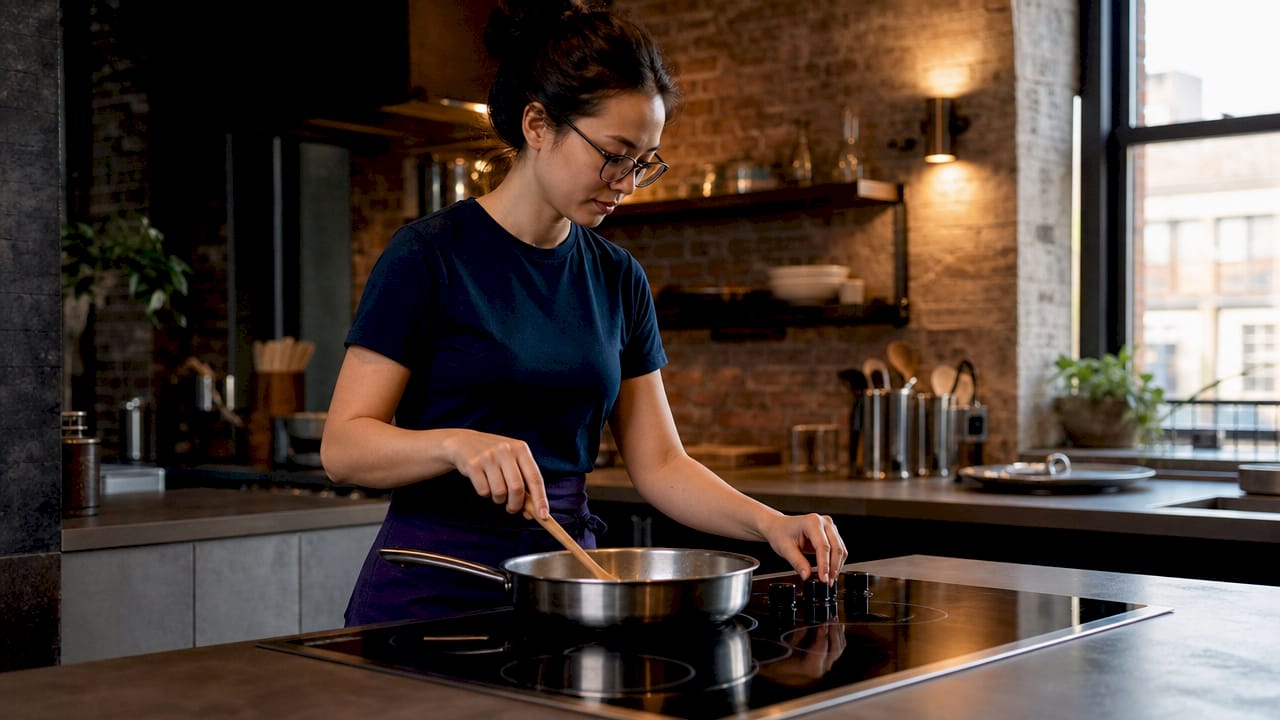
Induction works by generating a magnetic field that heats the pan directly, not the surface. This means faster response times and more accurate temperature control than gas or radiant electric. Induction elements deliver up to 4.3kW of power, which enables rapid boiling and stable low-temperature simmering on the same burner.
The sensor integration is what separates precision models from standard induction ranges. AI cameras and precision sensors enable specialized cooking modes like Air Sous Vide and No Preheat Air Fry. These modes modulate power automatically based on real-time temperature feedback. The result is consistent cooking without manual adjustments.
Features that define a precision induction range:
- Integrated temperature probes: Monitor internal food temperature without opening the oven
- Sensor-regulated burners: Infrared and surface sensors prevent overheating delicate sauces and confits
- Multi-mode oven: Air fry, convection bake, and steam functions in one cavity
- Power bridge elements: Combine two burners for griddle or oversized pan use
Pro Tip: Learn the manual controls on your induction range before relying on AI cooking modes. Smart features depend on connectivity and software updates. Manual mode always works.
Culinaryprofis covers the technology behind induction cooking precision in detail for cooks who want to understand what they are buying.
3. Precision combi ovens and steamers
Combi ovens combine three cooking modes in one cavity: dry convection heat, steam injection, and a combination of both simultaneously. This makes them the most technically capable appliance in the precision cooking category. Professional kitchens have used combi ovens for decades. Countertop versions now bring that capability to serious home cooks.
The steam injection function is the key differentiator. Steam transfers heat more efficiently than dry air, which means faster cooking at lower temperatures. For bread baking, steam in the first phase of the bake creates the crust structure that a standard oven cannot replicate.
Carryover cooking is a critical variable in combi oven use. Stop the heat cycle 3°F to 5°F below your target temperature. The residual heat in a thick protein will carry it the rest of the way without overcooking the exterior.
| Feature | Entry-level countertop combi | Professional countertop combi |
|---|---|---|
| Temperature range | 85°F to 480°F | 85°F to 575°F |
| Steam control | Manual injection | Automatic humidity sensor |
| Cooking modes | Convection, steam, combi | Convection, steam, combi, air fry |
| Built-in probe | Optional | Standard |
| Tray capacity | 2–3 trays | 5–6 trays |
The Anova Precision Oven 2.0 is a well-reviewed countertop combi priced at $799 with a built-in temperature probe and steam, convection, and air-fry modes. It demonstrates how multifunctional precision cooking has become accessible outside commercial kitchens.
Pro Tip: Use the steam-only mode at 212°F to proof bread dough. The controlled humidity prevents the dough surface from drying out, which gives you a more consistent rise than a standard oven with a pan of hot water.
4. Precision measurement tools: scales and thermometers
Precision measurement tools are not appliances in the traditional sense, but they are the foundation every other precision cooking device depends on. A sous-vide circulator set to 145°F is only as reliable as the thermometer you use to verify it. A combi oven recipe calibrated in grams fails if your scale reads in rough ounces.
Kitchen scales with NIST-traceable calibration give you gram-level accuracy for baking and portioning. NIST traceability means the scale’s accuracy has been verified against a national measurement standard. That matters for bread baking, where a 5-gram error in yeast can change the entire fermentation timeline.
Instant-read thermometers close the feedback loop between your appliance and your food. The Thermapen ONE reads temperature in under 1 second with ±0.5°F accuracy. That speed matters when you are checking a sear or pulling a roast from a combi oven.
Key tools to pair with precision appliances:
- Digital kitchen scale: 0.1-gram resolution, NIST-traceable, minimum 11-pound capacity
- Instant-read thermometer: Sub-second read time, ±0.5°F accuracy, waterproof housing
- Leave-in probe thermometer: Monitors internal temperature throughout a long cook without opening the oven
- Calibration solution or ice bath: Verify your thermometer accuracy monthly
Culinaryprofis covers precision measurement tools as part of its broader guide to professional kitchen equipment for home use.
5. Choosing the right precision cooking appliances for your kitchen
The right precision cooking appliance depends on three factors: your primary cooking goals, your available kitchen space, and your budget. Buying the most technically advanced device without matching it to your actual cooking habits produces a tool that sits unused.
Start by identifying your most frequent cooking tasks. Sous-vide suits cooks who prioritize proteins and want hands-off consistency. A combi oven suits bakers and cooks who want one appliance to handle roasting, steaming, and air frying. A smart induction range suits cooks who want full stovetop and oven capability in one unit.
Space is a practical constraint that precision cooking guides rarely address directly. A countertop combi oven requires 18 to 24 inches of dedicated counter space and adequate ventilation clearance. A sous-vide circulator stores in a drawer and uses any existing pot. Factor this into your decision before purchasing.
Budget guidance for precision cooking devices:
- Under $200: Sous-vide immersion circulator, digital scale, instant-read thermometer. This combination covers the widest range of precision techniques for the lowest cost.
- $200 to $500: Entry-level countertop combi oven or a mid-range induction burner with precision temperature control.
- $500 and above: Full countertop combi oven with steam injection and built-in probe, or a smart induction range with AI cooking modes.
Integrating multiple devices works best when each one handles a distinct task. Use the sous-vide circulator for proteins, the combi oven for baking and roasting, and the precision thermometer to verify both. Overlap in function creates redundancy, not capability.
Pro Tip: Start with a sous-vide circulator and a calibrated instant-read thermometer before investing in a combi oven. Mastering water-bath cooking builds the temperature intuition that makes every other precision appliance easier to use.
Culinaryprofis has a practical guide on equipping a home kitchen with professional-grade tools at different budget levels.
Key takeaways
Precision cooking appliances deliver consistent results because they control temperature accurately, not because they are expensive or connected to an app.
| Point | Details |
|---|---|
| Sous-vide sets the accuracy standard | Immersion circulators achieve ±0.1°F stability, the benchmark for professional precision cooking. |
| Measurement tools are non-negotiable | NIST-traceable scales and ±0.5°F thermometers verify what your appliances claim to do. |
| Combi ovens replace multiple devices | Steam, convection, and air-fry modes in one unit reduce counter clutter and expand technique range. |
| Manual controls beat app dependency | Experienced cooks rely on physical controls for daily reliability, regardless of smart features. |
| Match the appliance to your cooking style | Sous-vide suits protein-focused cooks; combi ovens suit bakers and roasters. |
What I’ve learned about precision cooking appliances after years in the kitchen
The biggest mistake I see home cooks make is assuming that a more expensive appliance automatically produces better food. Success with precision appliances depends on the cook’s understanding of heat and humidity control, not on the device’s price tag. A $799 combi oven will not fix a recipe that has the wrong target temperature.
Culinary test kitchens consistently prioritize hardware stability over smart features as the real measure of a precision appliance. I agree with that completely. The Wi-Fi connection on your circulator will fail at some point. The heating element should not.
The most overlooked tool in precision cooking is the instant-read thermometer. Cooks spend hundreds on a sous-vide unit and then trust the circulator’s display without ever verifying it with an external probe. That is a mistake. Verify your water bath temperature independently at least once per session.
The learning curve for precision appliances is real but short. Most home cooks reach consistent results within three to five cooks on any new device. The key is cooking the same protein or recipe twice in a row and comparing outcomes. That feedback loop builds intuition faster than any instruction manual.
— John
Professional combi ovens at Culinaryprofis
The AMPTO GOURMET 5T electric combi oven is a 5-tray, 8.5kW countertop unit built to Italian professional equipment standards. It combines steam, convection, and combination modes with precise temperature control across a full GN tray format. This is the kind of appliance that handles bread baking, protein roasting, and large-batch meal prep without compromise.

Culinaryprofis carries the AMPTO GOURMET 5T alongside a full range of professional small kitchen gadgets for home cooks who want commercial-grade performance. Free shipping, a flexible return policy, and expert support are standard on every order. Visit the product page for full specifications and current pricing.
FAQ
What is a precision cooking appliance?
A precision cooking appliance is any kitchen device that uses sensor-based temperature control to maintain accurate, repeatable cooking conditions. Common examples include sous-vide immersion circulators, combi ovens, and smart induction ranges.
How do you use sous-vide at home?
Attach an immersion circulator to a pot filled with water, set your target temperature, seal your food in a zip-lock or vacuum bag, and submerge it. Cook times range from 1 hour for fish to 48 hours for tough cuts like short ribs.
What accuracy should a kitchen thermometer have?
An instant-read thermometer with ±0.5°F accuracy is the standard for precision cooking. The Thermapen ONE reads in under 1 second at that accuracy level, which is sufficient for verifying sous-vide baths and checking roast doneness.
Do I need a combi oven for home baking?
A combi oven is not required, but its steam injection mode produces crust quality in bread that a standard oven cannot match. For serious home bakers, the investment in a countertop combi oven pays off in consistent results across every bake.
Are smart features on precision appliances worth the cost?
Smart features like app control and AI cooking modes add convenience but are not the core value of a precision appliance. Manual controls ensure reliability independent of connectivity issues, which is why experienced cooks prioritize physical interfaces over app-only operation.