
Portable Fryer Catering: A 2026 Guide for Event Pros

Portable fryer catering is the practice of using mobile, self-contained frying equipment to prepare fried foods at off-site events, festivals, and pop-ups without a fixed kitchen. The industry term for this setup is mobile frying foodservice, and it covers everything from single-vat propane units at outdoor fairs to multi-basket electric fryers inside catering tents. What is portable fryer catering in practical terms? It is a complete operational system that includes the fryer, fuel or power source, fire suppression, and waste oil management, all configured for transport and temporary deployment. Compliance with UL listing standards and local FOG (fats, oils, grease) regulations is not optional. It is the baseline requirement for operating legally at most venues in the United States.
What features distinguish portable fryers used in catering settings?
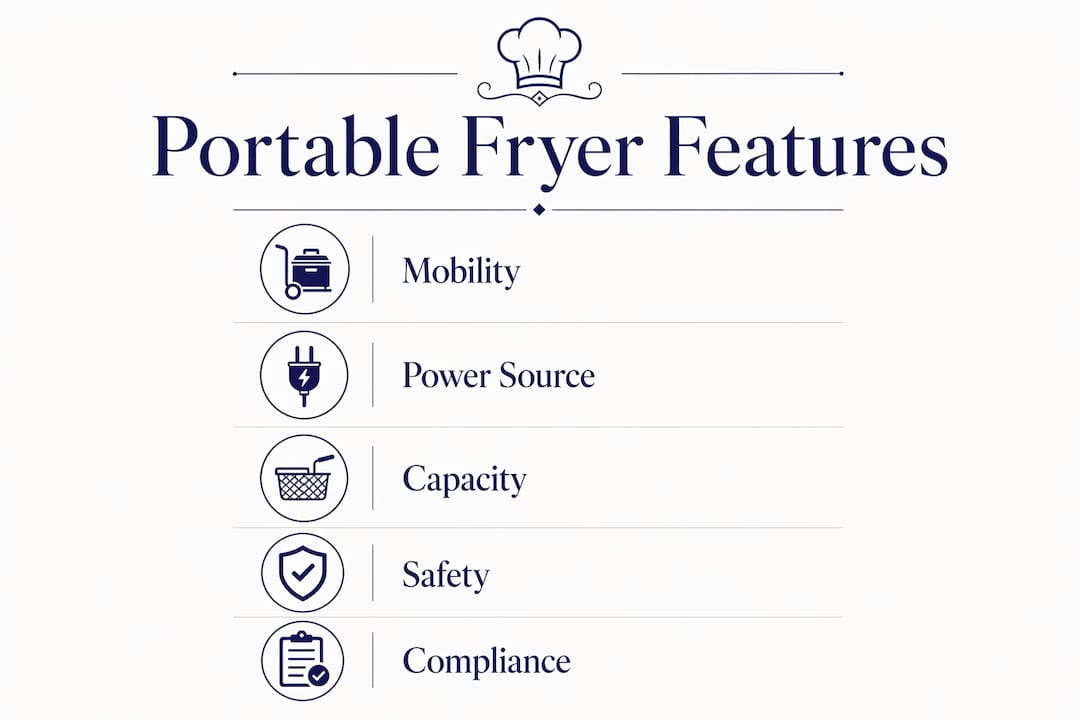
The right portable fryer for events is defined by four core characteristics: mobility design, power source, cooking capacity, and certified safety systems. Each one directly affects where and how you can operate.
Mobility and structural design
Mobile fryers require UL listing for mobile operation and must include securing brackets and anti-tip features to withstand vibration during transport. That requirement eliminates most consumer-grade fryers from professional catering use immediately. Units built for the field typically feature stainless steel bodies, locking casters or wheels, and propane tank holders integrated into the frame. The Omcan propane fryer, for example, includes wheels, two fry baskets, and a tank holder for a 30 lb vertical propane cylinder, making it a practical reference point for what field-ready design looks like.
Power source options
Portable propane deep fryers require no electrical connection and are the standard choice for festivals, concerts, and outdoor catering with high-volume needs. That independence from the power grid is a major operational advantage at parks, fairgrounds, and remote venues. Electric fryers are preferred indoors due to ventilation requirements and venue fire codes, making them the correct choice for convention centers, ballrooms, and covered event halls. Choosing the wrong power source for a venue type creates compliance problems before the first batch of food hits the oil.
Capacity and throughput
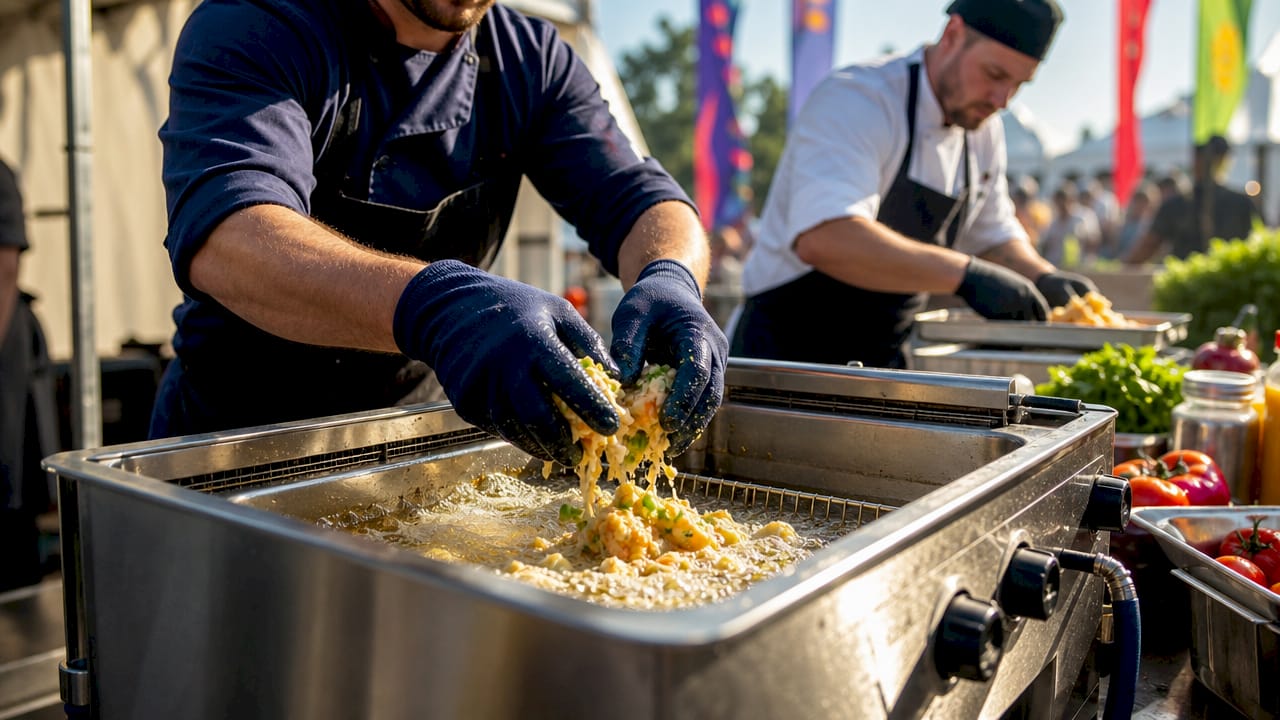
High-volume portable fryers used in catering often feature multiple vats or baskets to handle large food quantities efficiently. A 4-basket, 2-vat configuration enables faster service and the ability to cook different menu items simultaneously. For events serving several hundred guests per hour, single-vat units create bottlenecks that damage service quality and revenue.
Safety equipment checklist
- UL listing for mobile operation (mandatory, not optional)
- Anti-tip brackets and vibration-resistant mounting hardware
- Fire suppression system with nozzles positioned above each vat
- Locking casters to prevent movement during service
- Integrated propane tank holder or secured electrical connection
- Grease collection tray or drain valve for waste oil management
Pro Tip: Verify that any fryer you purchase or rent carries a current UL certification for mobile use, not just a standard commercial kitchen rating. The two certifications are different, and venues will check.
How does portable fryer catering operate in various event environments?
Catering with portable fryers follows a repeatable workflow, but the specifics change based on venue type, power availability, and local health department rules. Understanding the sequence prevents costly setup errors on event day.
Standard deployment sequence
- Site assessment. Confirm power availability, ventilation clearance, and surface stability before the event. Outdoor venues need level ground; indoor venues need confirmed exhaust pathways.
- Equipment transport and staging. Secure the fryer with anti-tip brackets during transit. Wheel it into position only after the vehicle or trailer is fully stopped and parked.
- Fuel or power connection. Connect propane lines with leak-tested fittings or plug into a generator-rated circuit. Generators rated 12–20 kW are typical for food trucks using electric fryers, though propane units reduce that electrical load significantly.
- Fire suppression check. Confirm suppression nozzles are properly positioned above each vat before ignition. This step is non-negotiable at inspected venues.
- Oil fill and temperature calibration. Fill to the manufacturer’s marked line and preheat to the target temperature before service begins. Rushing this step produces inconsistent food quality.
- Service operation. Use a rotation system for baskets to maintain oil temperature under high-volume demand. Assign one crew member specifically to oil monitoring and safety.
- Teardown and waste oil removal. Cool oil completely before draining. Transport spent oil in sealed containers to a licensed disposal facility per FOG regulations.
For outdoor catering cooking, propane fryers are the default because they operate independently of venue infrastructure. Food trucks, catering trailers, and tent kitchens all use this model. Indoor venues at convention centers or hotel ballrooms require electric units with verified ventilation clearance from the venue’s facilities team.
Pro Tip: Always carry a printed copy of your fryer’s UL certification and your fire suppression inspection record. Health inspectors at large events often request both before they issue a temporary food service permit.
What are the regulatory and safety considerations essential for portable fryer catering?
Regulatory compliance is the single most common operational failure point for caterers entering mobile frying for the first time. The rules are specific, and the penalties for non-compliance range from permit revocation to equipment seizure on-site.
Fire suppression requirements
Fire suppression systems must include a minimum of two nozzles for a two-vat fryer, with each nozzle positioned directly above its corresponding vat. That standard comes from NFPA 96, the National Fire Protection Association’s code for ventilation control and fire protection of commercial cooking operations. Suppression systems must be inspected and tagged by a certified technician, typically every six months. Venues with strict fire marshal oversight, such as convention centers and fairgrounds, will verify the inspection tag before allowing operation.
Waste oil and FOG compliance
Most cities prohibit on-truck disposal of used cooking oil. Operators must transport spent oil to licensed grease recycling or rendering facilities. This rule applies to portable catering setups the same way it applies to permanent food trucks. Pouring used oil into storm drains or dumpsters carries significant fines in most jurisdictions. Caterers should establish a relationship with a licensed grease hauler before their first event, not after.
Key compliance checklist for portable fryer operations
- Current UL listing for mobile frying equipment
- Fire suppression system with valid inspection tag (NFPA 96 compliant)
- Temporary food service permit from the local health department
- Proof of waste oil transport contract with a licensed FOG facility
- Ventilation plan approved by the venue or fire marshal
- Liability insurance covering mobile cooking operations
State-level certification variations
California, Oregon, Washington, and several northeastern states require additional certifications for mobile frying operations beyond standard national codes. California’s environmental health departments, for example, apply stricter grease management and equipment inspection standards than many other states. Caterers operating across state lines need to research each jurisdiction’s specific requirements before booking events. Assuming one state’s permit covers another is a reliable way to get shut down mid-event.
What are the key benefits and challenges of incorporating portable fryer catering?
The benefits of portable fryer catering are real and commercially significant. So are the challenges. Caterers who understand both sides make better equipment and logistics decisions.
Benefits
- Menu flexibility. Fried foods, including french fries, chicken tenders, donuts, and churros, are consistently high-demand items at events. Portable frying adds a category that stationary cold-prep catering cannot match.
- Fresh food on demand. Fried food served immediately after cooking outperforms pre-cooked and transported alternatives in quality and customer satisfaction.
- Venue independence. Propane-powered units operate anywhere with open-air ventilation, removing dependence on venue kitchen access.
- Revenue per event. High-margin fried items, priced at a premium at festivals and fairs, improve per-event profitability compared to sandwich or salad-only menus.
Challenges
- Equipment cost. Commercial-grade portable fryers with UL certification and fire suppression systems represent a significant upfront investment compared to stationary kitchen fryers.
- Regulatory complexity. Permits, inspections, and waste oil contracts add administrative overhead that caterers new to mobile frying often underestimate.
- Fuel and power logistics. Managing propane supply for a full-day festival or arranging generator power for electric units requires advance planning and backup contingencies.
- Oil management. High-volume frying degrades oil faster than low-volume kitchen use. Caterers need a system for monitoring oil quality and scheduling mid-event oil changes.
For guidance on selecting the right equipment before committing to a purchase, the portable commercial cooking equipment selection guide from Culinaryprofis covers the key decision criteria in detail. Planning your catering tent kitchen setup around fryer placement and ventilation requirements also prevents costly reconfiguration on event day.
Key takeaways
Portable fryer catering succeeds when equipment meets UL certification standards, fire suppression is properly configured, and waste oil disposal follows local FOG regulations from day one.
| Point | Details |
|---|---|
| UL certification is mandatory | Mobile fryers must carry UL listing for mobile operation, not just standard commercial kitchen certification. |
| Power source determines venue fit | Propane fryers suit outdoor events; electric fryers are required for most indoor venues with fire code restrictions. |
| Fire suppression is non-negotiable | A two-vat fryer requires two suppression nozzles, each positioned above a vat, per NFPA 96 standards. |
| FOG compliance protects your permit | Used cooking oil must be transported to a licensed facility. On-site disposal is prohibited in most U.S. cities. |
| State rules vary significantly | California, Oregon, Washington, and northeastern states require certifications beyond standard national codes. |
What I’ve learned from watching caterers get this wrong
Most caterers who struggle with portable frying operations share one problem: they treat equipment selection as a purchasing decision and compliance as an afterthought. That sequence is backwards.
The fryer you choose determines which permits you can get, which venues will accept you, and how much your insurance costs. A unit without current UL certification for mobile use is not a bargain at any price. It is a liability that can shut down your entire operation at the worst possible moment.
The other mistake I see consistently is underestimating oil management at scale. A single-vat fryer running continuously at a busy festival degrades oil quality within a few hours. Serving food in degraded oil affects flavor, increases smoke output, and raises fire risk. Caterers who build an oil rotation schedule into their event plan, and who carry enough fresh oil to execute it, produce noticeably better food and run cleaner operations.
My honest recommendation: before booking your first large-scale portable frying event, run a full simulation at a smaller venue. Test your setup time, your suppression system check, your oil management workflow, and your teardown procedure. The dietary planning considerations for your menu matter too, since allergen management around shared frying oil is a separate compliance issue worth addressing early. The caterers who build repeatable systems before scaling are the ones who stay in business.
— John
Culinaryprofis has the portable fryers your catering operation needs
Culinaryprofis stocks commercial-grade portable fryers built for professional catering demands, including UL-listed units with the capacity, mobility features, and safety systems that event operators require.
Every fryer in the Culinaryprofis catalog is sourced from established manufacturers and selected for durability, compliance, and real-world performance in mobile foodservice environments. The professional culinary equipment range includes propane and electric models suited to outdoor festivals, indoor venues, food trucks, and catering trailers. Free shipping, a flexible return policy, and direct expert support are standard. Call Culinaryprofis NOW to get matched with the right portable fryer for your next event.
FAQ
What is portable fryer catering?
Portable fryer catering is the use of mobile, self-contained frying equipment to prepare fried foods at off-site events, festivals, and temporary venues without a fixed kitchen. It requires UL-listed equipment, fire suppression systems, and compliance with local FOG waste oil regulations.
What power source is best for a portable fryer at outdoor events?
Propane is the standard choice for outdoor events because it requires no electrical connection and delivers high-volume output at festivals, fairs, and markets. Electric fryers are better suited to indoor venues where open-flame equipment is restricted by fire codes.
How many fire suppression nozzles does a portable fryer need?
A two-vat portable fryer requires a minimum of two fire suppression nozzles, one positioned above each vat, as required by NFPA 96 standards. Suppression systems must carry a current inspection tag from a certified technician.
Do I need a special permit to operate a portable fryer at events?
Yes. Most jurisdictions require a temporary food service permit from the local health department, plus proof of fire suppression inspection and a waste oil disposal contract. States including California and Oregon require additional mobile frying certifications beyond standard national codes.
How should used cooking oil be disposed of after a catering event?
Used cooking oil must be cooled, stored in sealed containers, and transported to a licensed grease recycling or rendering facility. Most U.S. cities prohibit on-site disposal of spent frying oil under FOG regulations, and violations carry significant fines.